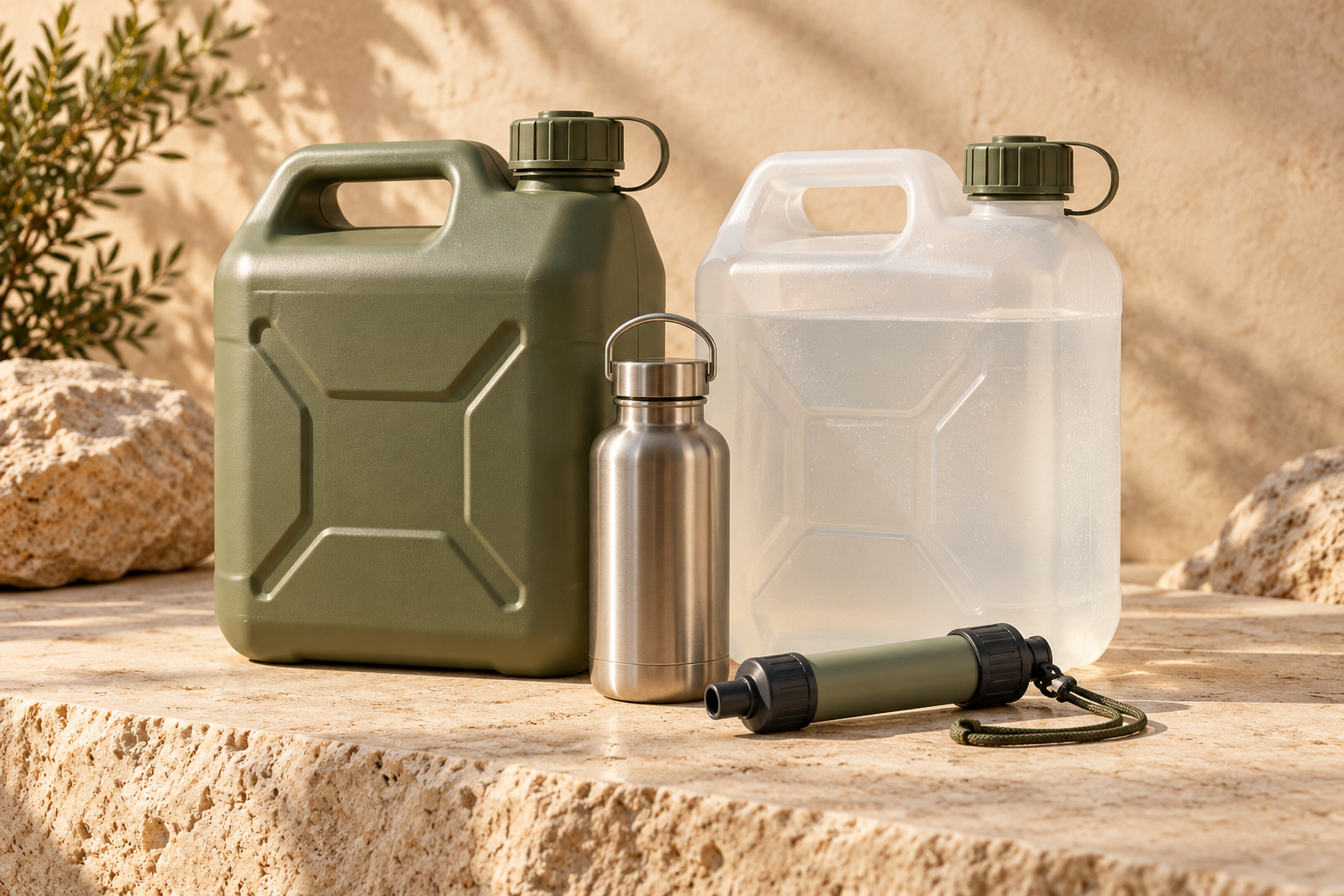
 First priority
Water, ready when you need it.
Build a dependable starting supply with portable storage and a backup treatment plan.
Product picks coming soon
Turn “we should be ready” into a practical plan—and discover the gear to bring it to life. Water, food, and backup power. One useful step at a time.
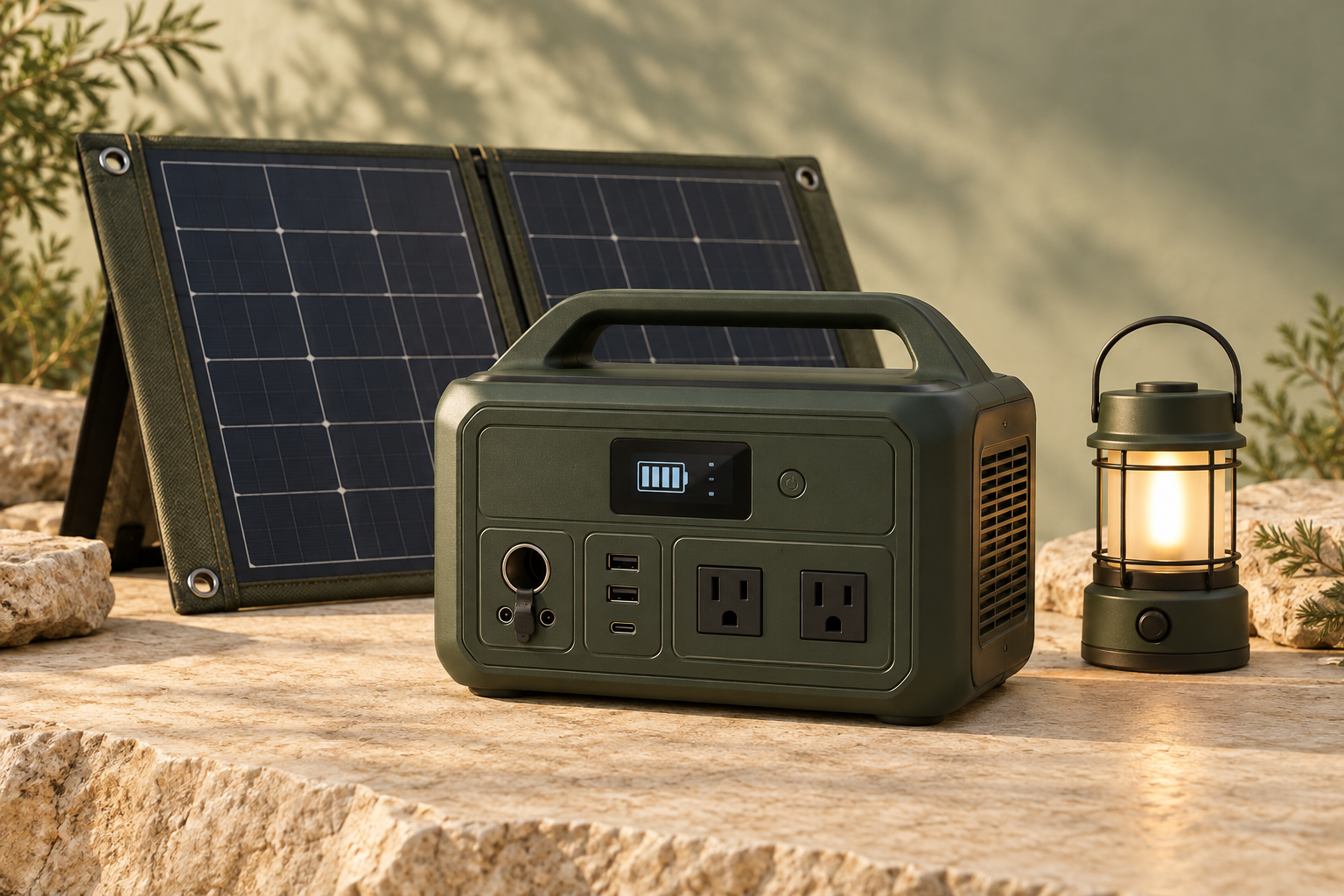
A few well-chosen essentials can make getting started feel manageable. Explore what belongs in each kit, then personalize the quantities below.
First priorityBuild a dependable starting supply with portable storage and a backup treatment plan.
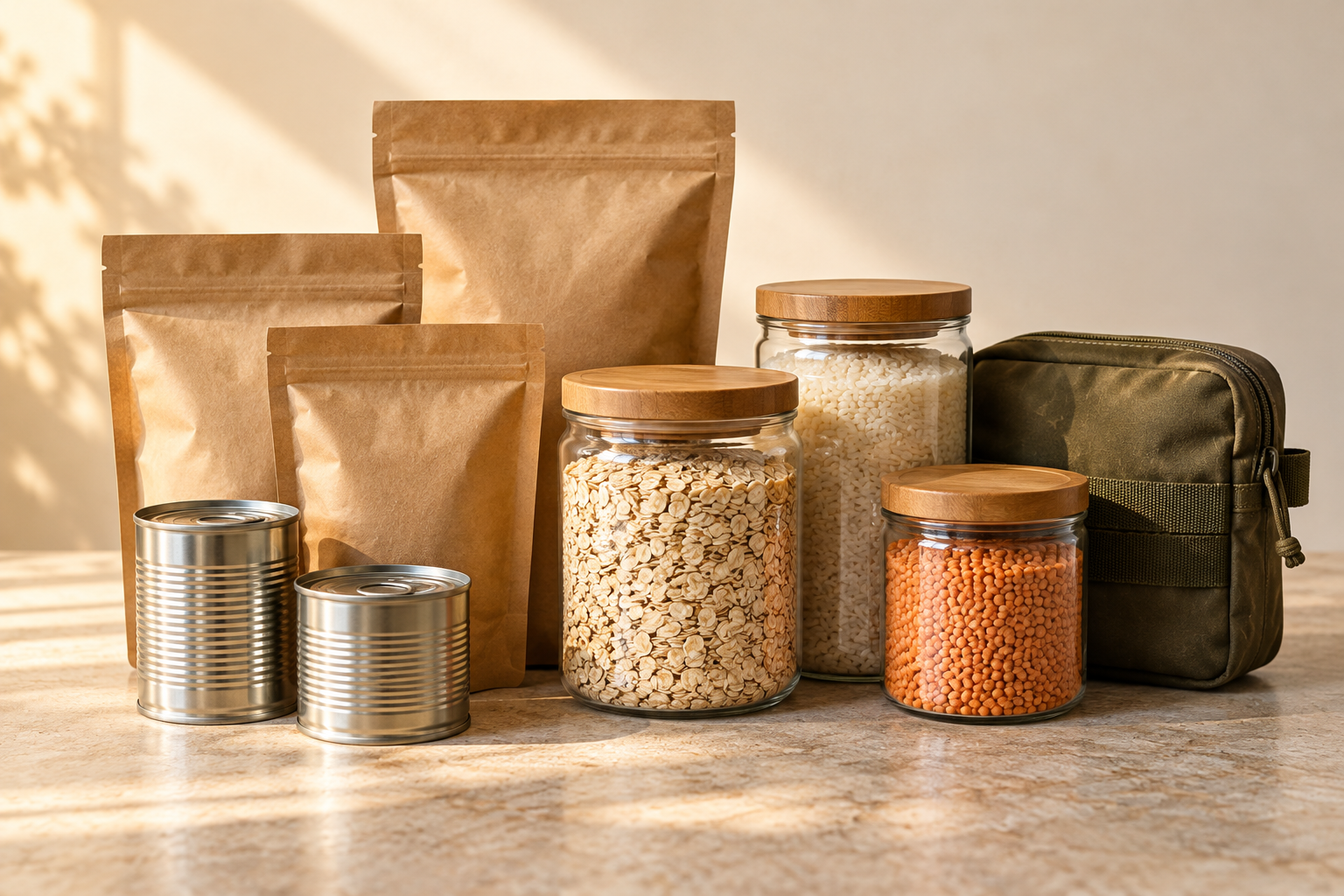 Pantry upgrade
Bring together everyday staples, easy meals, and the essentials your pets depend on.
Outage essentialsStart with lights and phones, then size up for the devices you rely on most.
Preview collections · AI-generated concept images show product categories, not actual items for sale. Specific products, prices, and retailer links are coming later.
Choose a package to set your timeframe, backup-power starting loads, and planning sections. Your household size, pets, climate, and nutrition settings stay yours.
The essentials for a short disruption or a quick departure.
A practical household supply with a fuller backup-power plan.
A longer horizon with resupply and evacuation planning.
Planning packages—not products for sale. Power loads are examples; add critical devices yourself. A battery target does not cover the full outage without recharging. Existing checklist marks are kept; review them after switching packages.
Planning estimates • US gallons • Review the assumptions below
Your plan updates as you make changes.
Build a stored supply, then plan reliable replenishment.
A filter does not make every water source safe. Do not rely on pool water, floodwater, or chemically contaminated water for drinking. Follow local advisories and use a safe alternative source.
Count calories on labels, account for dietary needs, and rotate your pantry.
Checking a box records your progress, not a safety assessment. Recheck quantities when your household or timeframe changes.
Open a category to customize it. Open categories are included when printing.
Illustrative daily energy use, not measured consumption. Phones scale with household size; other devices represent one household load.
Battery = daily Wh × backup days × 1.25. Solar = daily Wh ÷ (sun-hours × 0.75), rounded up to 100 W. Solar estimates replenish one day’s use; they do not guarantee recovery after multiple cloudy days. The 25% battery margin is illustrative.
Check usable battery capacity, continuous inverter output, and startup surge against your equipment. Plan medical-device backup with the supplier. A powered router does not guarantee internet service.
Fuel = one-way miles × 2 ÷ mpg × 1.25. Assumes a round trip and a 25% detour margin; actual traffic and idling can increase use. Container equivalents illustrate volume, not a recommendation to store that much fuel.
Account for fuel already in the vehicle. Check local storage limits and fire guidance before storing fuel; use approved containers and follow fuel/stabilizer instructions. No fixed storage life is guaranteed.
Faraday shielding and surge protection are different. A signal-blocking test does not establish EMP protection. Require relevant independent testing before relying on a protection claim.
This is a planning worksheet, not a guarantee of readiness. Water starts at 1 gallon per person per day; the hot-weather option uses a conservative 2-gallon allowance. CDC recommends a minimum three-day supply and, when possible, two weeks. Longer plans need reliable resupply. Calories, pet allowances, appliance loads, and the fuel margin are adjustable or illustrative assumptions—not blanket government recommendations.
Links & recommendations: Product collections are illustrative placeholders. This version contains educational links and kit guides only, with no affiliate tracking or checkout. No commissions, merchant relationships, product testing, or protection guarantees are implied.